GMIC Celebrates Alfred University Faculty, Students, and Alumni Named to 2026 R&D 100 Award-Winning Research Team
The Glass Manufacturing Industry Council congratulates Alfred University faculty, students, and alumni who contributed to a research team recognized with a 2026 R&D 100 Award.
The award-winning project, “Engineered Cermets for Advanced Reactor Waste Disposal,” brings attention to the kind of advanced materials research that continues to shape the future of ceramics, glass science, nuclear technology, and high-performance manufacturing.
For GMIC, this recognition is especially meaningful. Alfred University is a university member of GMIC and has long been connected to the education, research, and technical development that support the glass manufacturing industry. Honors like this show why investment in materials science, ceramic engineering, and hands-on research remains so important.
A Prestigious Recognition for Advanced Materials Research
The R&D 100 Awards recognize 100 of the most significant technologies developed each year. Alfred University faculty, students, and alumni were part of a multi-institutional team honored for developing high-density, durable ceramic-metal composite materials, also known as cermets, for advanced reactor waste disposal.
The project focused on creating a more efficient way to manage waste streams from advanced nuclear reactors. According to Alfred University, the resulting cermet waste form is designed to reduce storage footprint, improve operational flexibility, lower complexity, and support cost savings compared with current nuclear waste immobilization and storage technologies.
This work reflects the practical value of materials research. It is not just theory or laboratory exploration. It is research aimed at solving a real industrial and environmental challenge.
Alfred University’s Role in the Project
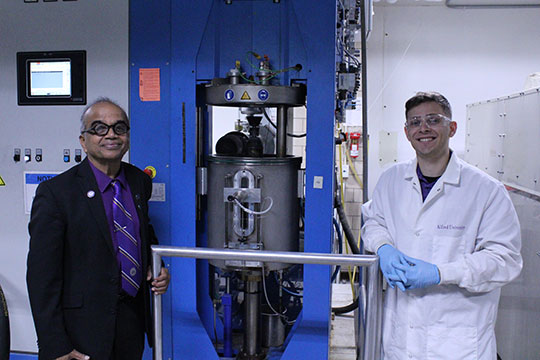
Alfred University’s team included S.K. Sundaram, Inamori Professor of Materials Science and Engineering, who served as a co-principal investigator on the project. Nate Marrero, an Alfred University alumnus and current Ph.D. student in materials science and engineering, also played an important role in the research.
Marrero earned his bachelor’s degree in ceramic engineering from Alfred University in 2023 and his master’s degree in ceramic engineering in 2025. His work included preparing and characterizing cermet samples and collaborating with researchers from national laboratories.
The project also included Alfred University alumni Jake Amoroso and John Vienna. Amoroso, who earned degrees in glass science engineering and materials science and engineering from Alfred, is a principal engineer at Savannah River National Laboratory. Vienna, an Alfred alumnus in ceramic engineering, is a materials scientist and Fellow at Pacific Northwest National Laboratory.
Their involvement is a strong example of how Alfred University’s education and research programs continue to influence important work across national laboratories, government-funded research, and advanced materials development.
A Collaborative Effort Across Universities and National Laboratories
The award-winning team included Savannah River National Laboratory as product developer, with co-developers from Rutgers University, Alfred University, Washington State University, the University of South Carolina, Missouri University of Science and Technology, and Pacific Northwest National Laboratory.
The research was supported by a $4 million award from the U.S. Department of Energy through ARPA-E’s ONWARDS program. Alfred University’s share of the grant was approximately $500,000.
The project, known as PACE-FORWARD, focused on developing a scalable route for turning used nuclear fuel into a high-density and durable cermet waste form. The resulting technology has also been granted a U.S. patent.
That kind of collaboration matters. Complex materials challenges require universities, national laboratories, faculty researchers, students, and industry-connected experts working together. No single discipline or organization solves these problems alone.
Why This Matters to the Glass Manufacturing Community
While this research focuses on advanced reactor waste disposal, the broader importance reaches across materials science and manufacturing.
The glass industry depends on many of the same foundations shown in this project: high-temperature processing, ceramic and glass science, durability, chemical performance, thermal behavior, testing, characterization, and scale-up. These are the kinds of technical skills and research capabilities that also support progress in glass manufacturing.
For GMIC, this recognition is a reminder that the future of the glass industry depends on continued investment in research, education, and workforce development. Students who work on advanced materials projects gain experience that can carry into glass manufacturing, ceramics, energy, defense, aerospace, environmental management, and other technical fields.
Research experiences like this also help students understand how laboratory work connects to real-world applications. That connection is critical for developing the next generation of engineers, scientists, and industry leaders.
Recognizing the People Behind the Research
GMIC congratulates S.K. Sundaram, Nate Marrero, Jake Amoroso, John Vienna, Alfred University, and the full project team on this well-earned recognition.
Their work demonstrates the value of technical education, applied research, and collaboration across institutions. It also highlights the role that universities play in preparing students for meaningful careers in materials science and manufacturing.
As the glass manufacturing industry looks ahead, achievements like this should be celebrated. They show what is possible when experienced researchers, emerging professionals, and leading institutions work together to solve difficult problems.
 JOIN GMIC