Manufacturers Push Back on Proposed Federal Heat Standard
Why Heat Matters in Glass Manufacturing
Glass manufacturing is inherently hot work. Furnace temperatures often exceed 2,500 °F, and the environment must be carefully engineered to manage heat and protect workers. The tragic reality is that from 1992 to 2017, exposure to heat killed 815 U.S. workers and seriously injured more than 70,000. As extreme heat becomes more frequent, employers and regulators face a critical question: how do we safeguard workers without shutting down industries that rely on high temperatures? This post explores the debate around a proposed federal heat standard and why many manufacturers, including those represented by the Glass Manufacturing Industry Council (GMIC), are urging lawmakers to reconsider.
Understanding the Proposed Heat Standard
In 2024, the Occupational Safety and Health Administration (OSHA) released a draft rule titled “Heat Injury and Illness Prevention in Outdoor and Indoor Work Settings.” The proposal seeks to create a uniform standard for all sectors under OSHA’s jurisdiction. Key components include developing a written Heat Injury and Illness Prevention Program (HIIPP) for employers with more than ten employees. The proposed rule would:
- Trigger preventative measures when the heat index reaches 80 °F, with additional actions required at 90 °F.
- Require site‑specific plans for indoor work areas, including monitoring and tailored controls.
- Mandate heat monitoring and record keeping for at least six months.
- Define acclimatization protocols that gradually increase workloads for new or returning employees while requiring employers to pay workers for this time.
- Compel employers to compensate workers for all break times, including separate time for donning and doffing protective equipment.
- Institute extensive training for workers and supervisors at multiple stages, including hiring, changes in conditions, and annually.
The rationale behind these measures is clear: OSHA seeks to prevent heat‑related illnesses such as heat stroke, kidney failure, and other serious conditions that have long plagued labor‑intensive industries.
Manufacturers Push Back on Proposed Federal Heat Standard
While worker safety is paramount, many manufacturers argue that OSHA’s proposed rule is too prescriptive. The National Association of Manufacturers (NAM), of which GMIC is a member, has criticized the draft as unworkable. In a May 2026 statement, NAM explained that the rule would require employers to identify heat hazards, implement engineering and work‑practice controls, establish emergency response plans, train personnel, maintain extensive records, and add paid break mandates. NAM and other industry leaders call the proposal a “one‑size‑fits‑all” mandate that fails to account for the diversity of manufacturing operations.
From our perspective at GMIC, a uniform 80 °F trigger does not reflect the realities of glass production. Our furnaces run continuously at extremely high temperatures, with robust ventilation, insulation, and protective gear designed to manage heat. Applying the same threshold used for outdoor construction sites to a controlled glass plant could disrupt operations without enhancing safety. Many GMIC members already have detailed heat‑stress prevention plans tailored to their specific processes. Additional paperwork and mandated break structures may divert resources away from innovation and investment in more efficient technology.
Legislative Response: The Heat Workforce Standards Act
In response to industry concerns, Senators Bill Cassidy (R‑LA) and Jim Risch (R‑ID) introduced the Heat Workforce Standards Act in 2026. The bill aims to block the Department of Labor from finalizing or enforcing the 2024 heat standard. NAM stated that this legislation would relieve manufacturers of burdensome compliance costs while still allowing flexibility to protect workers from excessive heat exposure.
Supporters argue that existing workplace safety laws already require employers to provide a safe work environment. Many businesses have voluntarily implemented heat‑management programs that include acclimatization, hydration stations, rest breaks, engineering controls, and emergency response protocols. A rigid federal standard could undermine these initiatives by imposing thresholds and record‑keeping requirements that are ill‑suited to specific industries.
Why Glass Manufacturers Care
Operations and Safety
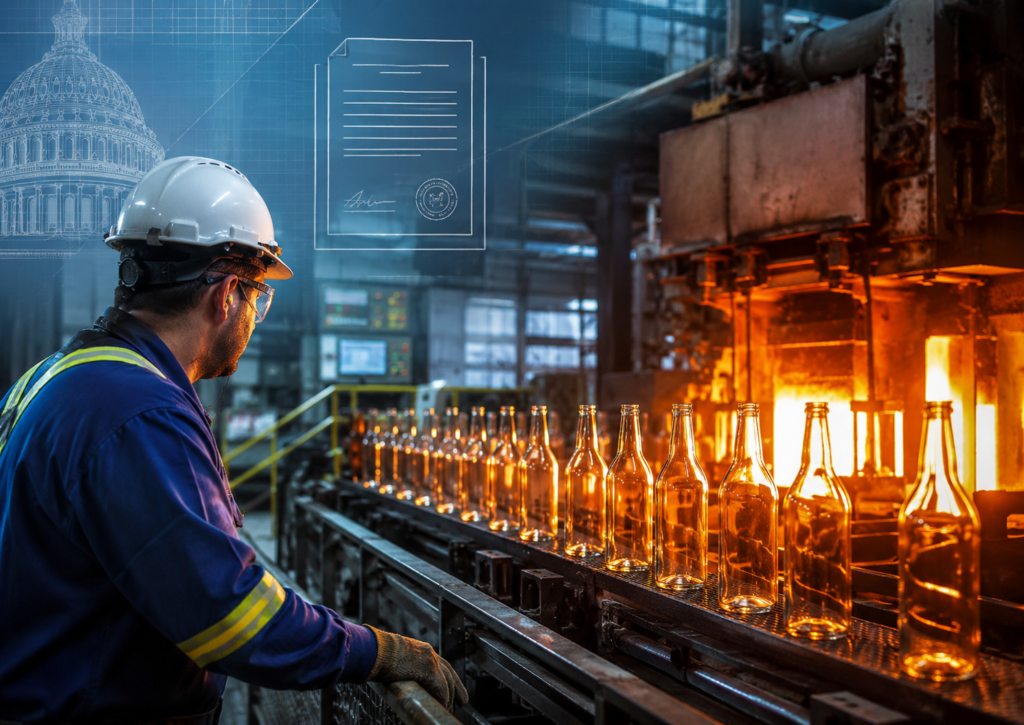
Glass manufacturing relies on continuous melting and cooling cycles. Plants invest heavily in ventilation systems, refractory materials, and personal protective equipment to manage heat. Our members routinely monitor ambient and personal temperatures, ensure proper hydration, and rotate tasks to minimize heat exposure. The draft OSHA rule does not differentiate between processes that inherently require high heat and those that can operate at moderate temperatures. Treating a glass furnace the same as an outdoor construction site oversimplifies the risk profile.
Flexibility and Innovation
GMIC has a long history of collaborating with the U.S. Department of Energy to improve energy efficiency and reduce emissions. Projects like regenerative burners, waste‑heat recovery, and electric melting demonstrate that innovation, not regulation, can reduce both heat exposure and greenhouse gas emissions. A prescriptive regulation could slow these efforts by forcing companies to allocate capital toward compliance instead of research and development.
Sector‑Specific Research
Stakeholder comments on the proposed rule reveal a desire for flexibility. The Construction Industry Safety Coalition supports a standard adaptable to the construction industry’s fluid nature, while the Coalition for Workplace Safety notes that existing programs are effective and calls for a performance‑based approach rather than prescriptive thresholds. The same is true for glass manufacturing: operations vary dramatically between container, flat, fiber, and specialty segments. A one‑size‑fits‑all temperature threshold does not account for differences in furnace design, product types, and ventilation strategies.
A Path Forward: Balanced Standards and Collaboration
Heat‑related illness is a serious concern. The Bureau of Labor Statistics reports that heat stress killed 815 workers and injured more than 70,000 between 1992 and 2017. Improving worker safety requires collaborative solutions that combine engineering controls, administrative practices, and education. GMIC supports a performance‑based standard that focuses on outcomes—ensuring that workers’ core body temperatures remain within safe limits—rather than rigid environmental triggers.
Regulators should engage with industry experts, unions, and researchers to gather data on heat exposure in different settings. Technology offers promising tools: real‑time monitoring devices, wearable sensors, and advanced ventilation systems can alert supervisors to heat stress before it becomes dangerous. Training programs tailored to workers’ literacy levels and native languages are vital. These efforts align with our industry’s commitment to innovation and continuous improvement.

 JOIN GMIC