Why Research and Development Is Critical to the Next Era of Glass Manufacturing
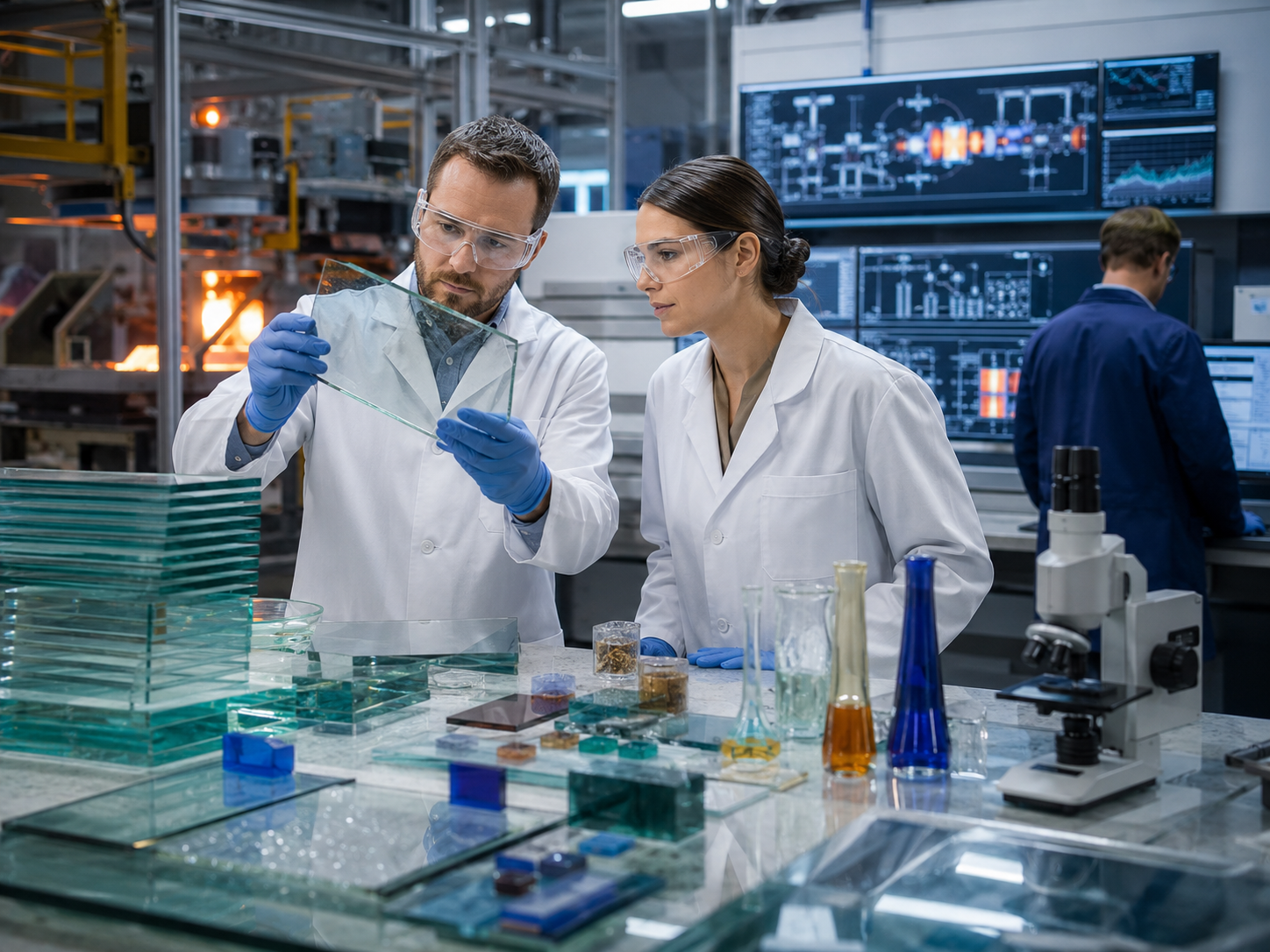
The glass industry employs nearly 78,000 people in the United States as of 2024, and every one of those jobs is connected to an industry that is becoming more technical, more data-driven, and more competitive. That is exactly why research and development matters so much right now.
Glass manufacturing has always required a rare mix of science, engineering, craftsmanship, and operational discipline. But the next era will demand even more from manufacturers. Plants are being asked to improve energy efficiency, reduce emissions, maintain quality, increase uptime, manage costs, and develop the next generation of skilled workers.
That does not happen by accident. It happens through focused research, practical testing, and better industry data.
GMIC’s Glass Manufacturing Industry Report highlights several key areas shaping the industry, including production and revenue volumes, market share, capital expenditures, employment and salaries, energy usage and costs, emissions regulations, operational data, and research and development. Learn more here: https://gmic.org/industry-report-public/
The glass industry employs nearly 78,000 people in the United States as of 2024.
Why Research and Development Is Critical to the Next Era of Glass Manufacturing
Why Research and Development Is Critical to the Next Era of Glass Manufacturing comes down to one simple point: the industry’s biggest challenges are too complex for guesswork.
Improving furnace performance, reducing energy use, advancing recycling, preventing defects, and meeting evolving emissions expectations all require testing, data, and technical collaboration. These are not small improvements that can be solved with one new tool or one process change. They involve the entire manufacturing system.
Research and development gives glass manufacturers a way to test ideas before they become expensive plant-level decisions. That matters because a furnace, inspection system, refractory strategy, or control platform can influence production for years.
In my view, this is where R&D becomes more than a technical function. It becomes a business advantage. The companies that invest in smarter processes, better materials, and better data will be better prepared for the next decade of glass manufacturing.
Turning Industry Data Into Action
One of the most valuable parts of the GMIC Industry Report is that it gives the industry a clearer look at where things stand. It includes areas such as employment, salaries, energy usage, capital expenditures, operating costs, production volume, and market trends.
That type of information matters because better decisions start with better visibility.
If energy costs are putting pressure on operations, research can focus on furnace efficiency, heat recovery, alternative fuels, boosting, and improved insulation. If workforce demand is changing, R&D can support safer equipment, better training tools, and more intuitive control systems. If quality expectations are increasing, manufacturers can invest in sensors, predictive analytics, and better process monitoring.
The goal is not to chase technology for the sake of technology. The goal is to understand where the industry has the greatest need and where innovation can create measurable value.
Where R&D Can Make the Biggest Impact
Furnace Efficiency and Energy Management
Glass manufacturing is energy-intensive, and furnace performance remains one of the most important areas for improvement. Research into melting efficiency, combustion, electrification, hybrid systems, insulation, waste-heat recovery, and advanced monitoring can help manufacturers reduce energy demand while protecting product quality.
That balance is important. The industry cannot simply focus on using less energy. It must do so while maintaining stable furnaces, consistent glass quality, safe operations, and reliable output.
This is one reason Why Research and Development Is Critical to the Next Era of Glass Manufacturing. It gives companies a structured way to improve efficiency without creating new risks in production.
Defect Prevention and Quality Control
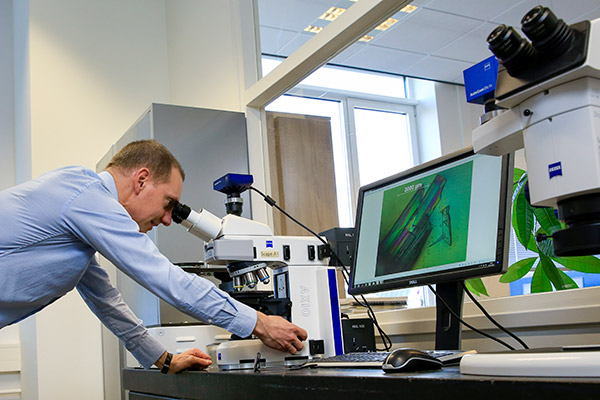
Many glass defects begin before they are visible. Issues such as seeds, cords, blisters, stones, or forming-related defects may be tied to furnace conditions, refractory performance, raw material variation, temperature changes, or process instability.
Research into sensors, AI, predictive quality systems, and advanced process controls can help manufacturers identify patterns earlier. When teams can connect current operating conditions to future quality outcomes, they have more time to act before a small issue becomes a larger production problem.
This is where R&D can directly support yield, consistency, and customer confidence.
Refractories and Furnace Life
Refractory materials play a major role in furnace reliability, campaign life, glass quality, and energy performance. As furnace designs evolve and operating conditions become more demanding, refractory research becomes even more important.
Manufacturers need materials that can withstand high temperatures, aggressive atmospheres, corrosion, thermal shock, and changing fuel strategies. Better refractory performance can reduce downtime, limit contamination risks, and support more stable furnace operations over the long term.
Recycling and Raw Materials
Glass recycling is a major opportunity, but it is not as simple as adding more cullet to the batch. Cullet quality, contamination, chemistry consistency, collection systems, and sorting technology all affect how recycled glass performs in production.
R&D can help improve sorting methods, contamination detection, batch optimization, and melting strategies. This helps manufacturers use recycled material more effectively while protecting quality and furnace performance.
For an industry focused on sustainability and efficiency, this work is essential.
Research Must Connect to Real Plant Conditions
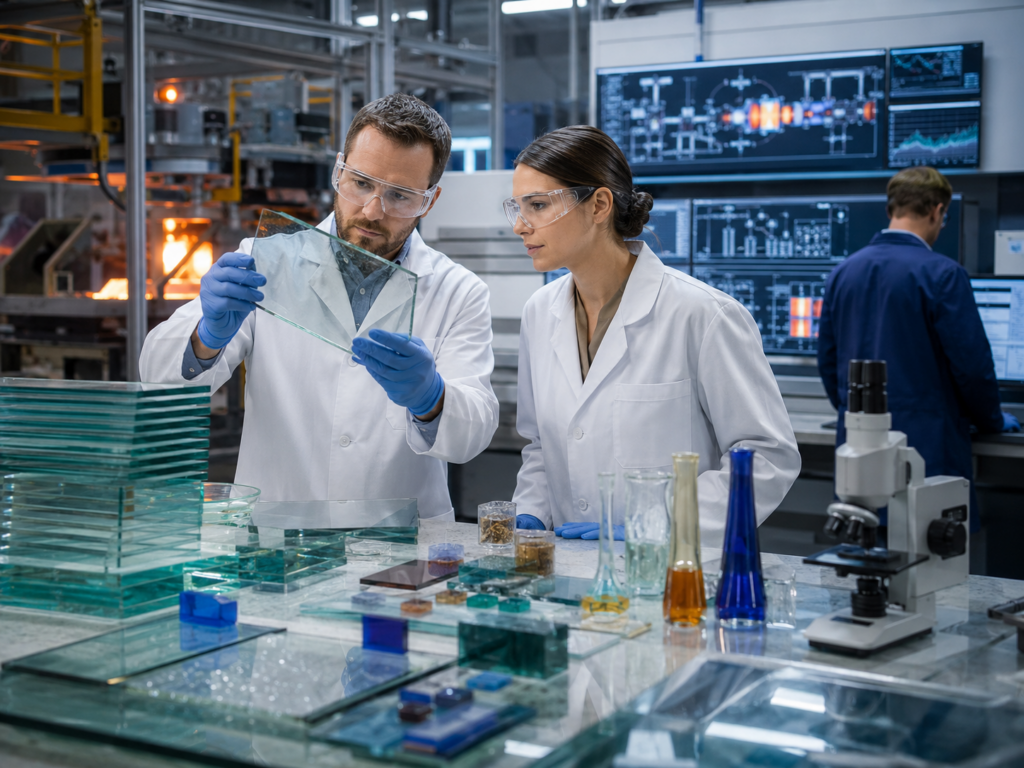
The best research is practical. It has to work in real plants, with real operators, real production schedules, real maintenance demands, and real customer requirements.
That is why validation matters. A new technology may look promising in a controlled setting, but glass manufacturers need to know how it performs under actual operating conditions. They need to understand the cost, the risk, the learning curve, and the long-term value.
Why Research and Development Is Critical to the Next Era of Glass Manufacturing is not just about inventing new solutions. It is about proving which solutions can be trusted in demanding production environments.
R&D Also Supports the Workforce
The future of glass manufacturing depends on people as much as technology.
The industry needs furnace specialists, engineers, control room technicians, maintenance leaders, data analysts, quality teams, and plant operators who understand both traditional glassmaking and modern systems.
Research and development can support that workforce by improving training, simplifying complex data, making equipment safer, and giving teams better tools to make decisions. Good technology does not replace expertise. It helps skilled people use their experience more effectively.
That is an important point for the next generation of glass professionals. The industry is not moving away from technical knowledge. It is becoming even more dependent on it.
The Next Era of Glass Manufacturing Will Reward Practical Innovation
Glass manufacturing is under pressure from many directions: energy costs, environmental expectations, capital planning, workforce needs, quality demands, and global competition. Research and development helps the industry respond with discipline instead of reaction.
The companies that will lead the next era are the ones willing to test, measure, improve, and collaborate. They will use data to make better decisions. They will invest in people and technology. They will look for ways to improve performance without losing sight of quality, safety, and reliability.
Why Research and Development Is Critical to the Next Era of Glass Manufacturing is ultimately about keeping the industry strong. It supports better furnaces, better products, better jobs, better data, and better long-term decisions.
For GMIC and the broader glass manufacturing community, the opportunity is clear: continue supporting the research, technical exchange, and industry insight that help glass manufacturers move forward with confidence.
 JOIN GMIC